

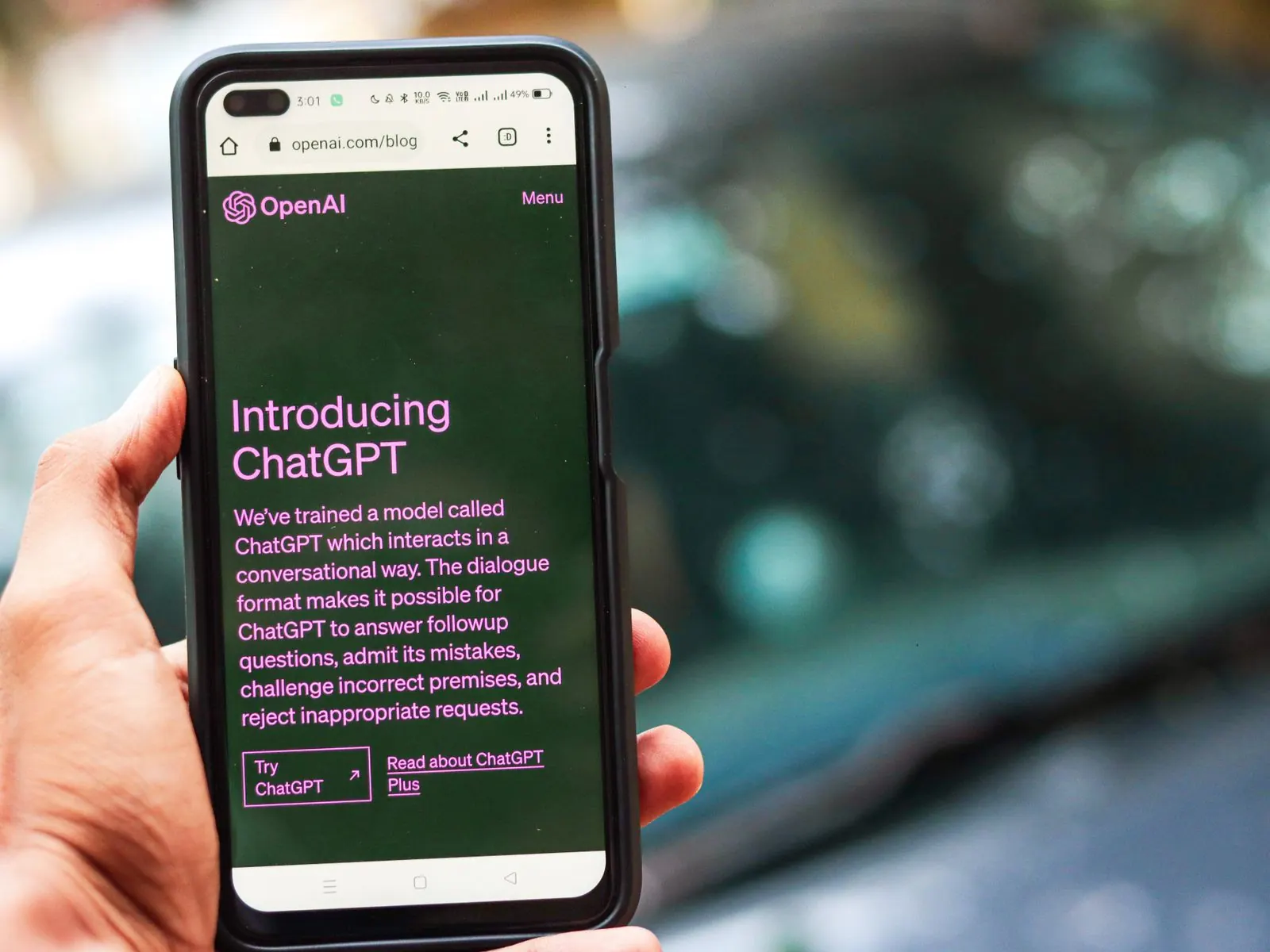
AI visibility is how often, and how accurately, AI assistants like ChatGPT, Perplexity and Google’s AI answers name your business when someone asks a question you should be the answer to. If a customer asks “who should I call for this near me” and the assistant names three companies, AI visibility is whether you’re one of the three.
For twenty years, “getting found online” meant ranking on Google. That’s still true, but it’s no longer the whole story. More of your customers now ask an AI assistant a question and take the answer it gives them, without clicking a single link. If your business isn’t in that answer, those customers never hear about you.
You’ll hear other names for this work: GEO (generative engine optimization) and AEO (answer engine optimization). They mean roughly the same thing. We call it AI visibility because that’s the question a business owner asks: can the assistants see us or not?
What does AI visibility mean in plain English?
It comes down to three questions about the answers your customers are getting.
- Are you named? When someone asks about your kind of business in your area, does the assistant mention you at all?
- Is it right? Are the hours, services, locations and prices it repeats about you correct and current?
- Are you recommended? Being the last name on a long list is different from being the first name with a reason attached.
How is AI visibility different from SEO?
Traditional SEO is about ranking a page so a person clicks it. AI visibility is about being named and recommended inside an answer the AI writes. The assistant reads across many sources, puts them together, and mentions a few businesses or facts. You’re not competing for a click. You’re competing to be something the AI trusts enough to repeat.
The good news is that much of the foundation is the same as good SEO. A page that ranks well and answers the question clearly is also a page an assistant is likely to read. What changes is the score. SEO counts positions and clicks. AI visibility counts mentions, accuracy, and how often you’re the one recommended. The new part of the work is making your information easy for a machine to find, check, and repeat with confidence.
Does my website show up in AI search? How to check
Ask the assistants yourself. It’s free.
- Write down five to ten questions a real customer would ask. Skip your business name for now. Use the questions people ask before they know who you are: “best [your service] in [your town],” “who should I call for X,” “how much does X cost around here.”
- Ask them in more than one assistant. ChatGPT, Perplexity, Gemini, Microsoft Copilot and Google’s AI answers read from different sources, and they often disagree.
- Write down three things each time: whether you were named, who was named instead, and which websites the answer pointed to as its sources.
- Then ask about your business by name and check every fact it gives back.
- Keep the list and ask the same questions next month. One check is a snapshot. The same questions asked over time is a measurement.
Two things to know before you read too much into the results. Answers change from one try to the next, so ask each question a few times. And “showing up” can mean two different things. Your website can be cited as a source without your business being recommended, and you can be recommended without your website being cited at all. Check for both.
That first check is often a wake-up call. Sometimes the business is missing. Sometimes the AI is confidently repeating information that’s years out of date.
What decides whether AI recommends a business?
- Clear, factual, well-organized content. AI answers favor pages that say things plainly: who you are, what you do, where, and for whom. Marketing fluff gets skipped.
- A direct answer to the question. A page that answers a specific question near the top is easier to quote than one that circles around it.
- The same facts everywhere. Your name, address, services and key details should match on your site, your listings, and other people’s sites. If your hours are different on Google than on your website, the AI trusts you less.
- Reviews and reputation. Assistants lean hard on what other people say about you. A strong, steady review profile is now a visibility factor, not just a trust badge.
- Structured data and clean pages. Code on your site (called schema) tells machines plainly what your business is, so they pull the right facts.
- Being mentioned by others. Coverage and citations across the web still matter, maybe more than ever, because that’s the raw material AI reads.
We go into what the managed version of this work includes on our AI Visibility page.
How do we measure it on our own business?
We sell this service, so we run it on ourselves first. In July 2026 we locked a list of 28 questions a customer might ask about a company like ours. Some are local. Some are broad, like the question this article answers. We ask the same 28, unedited, every time, so a before and an after can be compared fairly.
The first run, against our old website, was humbling. We weren’t named in any of the 28. We launched a rebuilt site in August and we’re early in the work. We’ll publish the before and after once enough time has passed for the numbers to mean something, including the parts that aren’t flattering.
It’s the same rule behind everything we offer: we sell what we run. If a company offers to improve your AI visibility, ask to see how it measures its own.
How long does it take, and what should you expect?
Nobody can promise you a place in an AI answer. The assistants change often and don’t publish their rules. What you can control is what they have to work with.
Wrong facts are the part most in your hands, because you own your website and your listings. Reviews and mentions from other sites build slowly, so being recommended for a competitive question takes longer than getting your hours right. A monthly check tells you whether the work is adding up.
Where this is going
AI search isn’t replacing Google overnight, and classic SEO still matters. But the direction is clear: a growing share of customers find businesses inside an answer you don’t control. The businesses that treat AI visibility as its own job now, with clean facts, a strong reputation, well-organized content and mentions on other sites, will be the ones the assistants recommend as this becomes the normal way people search.
What to do next
If you’ve never checked how the major AI assistants describe your business, that’s the first step, and it doesn’t cost anything. What they say might surprise you. It’s also fixable.
If you’d rather have us look, ask for an AI Visibility Snapshot. It’s free, and it shows you where you stand before you spend anything. To see what a full paid audit looks like, here’s a sample audit report for a fictional business. Our prices are posted on the plans page.
Common questions about AI visibility
What do GEO and AEO mean?
GEO is generative engine optimization. AEO is answer engine optimization. Both are industry terms for the work of getting a business named in AI answers. AI visibility is the result that work is after.
Which AI assistants matter?
Today, the ones your customers are most likely to use are ChatGPT, Google’s AI answers, Gemini, Perplexity and Microsoft Copilot. The work isn’t tied to any one of them. Clear pages, matching facts, reviews and mentions feed all of them.
Do I need a new website to improve my AI visibility?
Usually not. Most of the work is facts, content, reviews and listings. The exception is a site that software can’t read well. If a machine can’t tell what you offer from your pages, it can’t repeat it.
How often should I check?
Once a month, with the same questions each time.
What does it cost?
Checking it yourself is free, and so is our AI Visibility Snapshot. Our one-time AI Visibility Audit is $499, and managed AI Visibility starts at $499 a month. Every price is on the plans page.